Siemens Energy is a global energy technology company serving customers across the energy value chain. At its Nuremberg site, the company operates a long-established steam turbine service facility in a highly complex brownfield environment. With more than 100 years of industrial heritage, the site manages high-mix, low volume, engineered-to-order (HMLV/ETO) workflows that demand precision, traceability, and close synchronization between physical operations and digital systems.
At its Nuremberg plant, an established steam turbine service operation with over a century of industrial heritage, Siemens Energy operates in a highly dynamic brownfield production environment with multiple handover points, staging areas, customs clearance zones, and external processing steps. In this setting, ensuring smooth coordination between material flow and workflow execution is essential to maintaining transparency, speed, and process reliability across the shop floor.
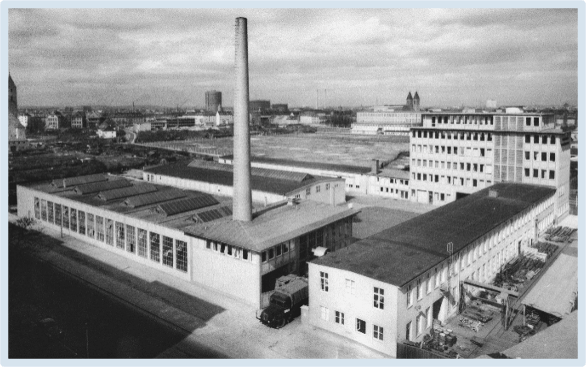
Siemens Energy Nuremberg site (historic view)
In a high-mix, engineered-to-order environment, even small gaps between physical operations and digital records can affect execution speed, audit readiness, and process consistency. Siemens Energy therefore saw an opportunity to further strengthen coordination, improve visibility into asset movements, and support more seamless alignment between the shop floor and SAP.
To build on this foundation, Siemens Energy looked for a solution that could provide real-time visibility, automate workflow triggers, and enable faster, more informed decision-making—while fitting naturally into the realities of an established production environment.
Siemens Energy implemented Inpixon’s real-time location system (RTLS) together with askPixi AI to create a location-aware, event-driven operating model across the Nuremberg site.

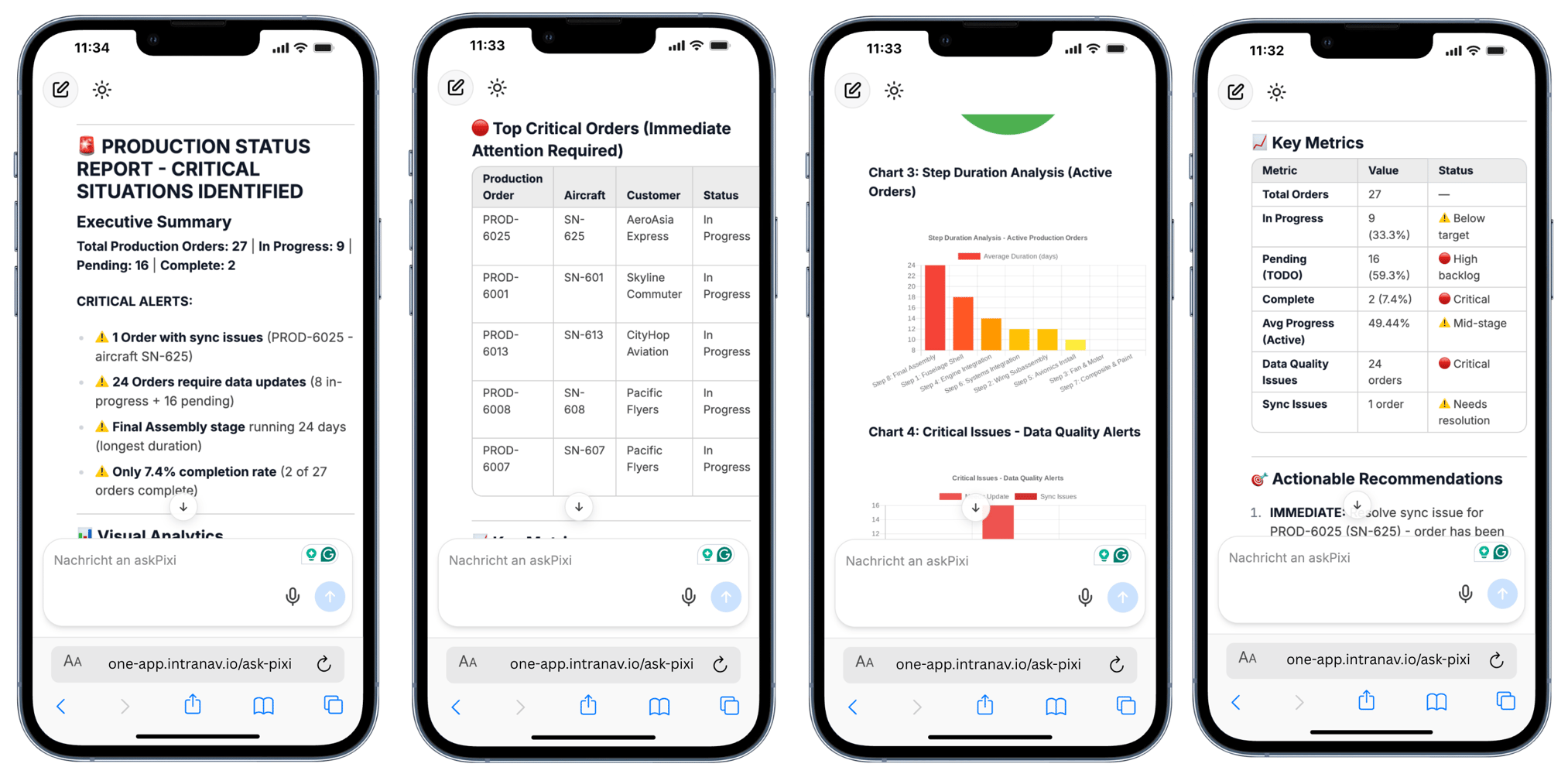
Illustrative demo screens of the solution shown as a symbolic image. Visuals are for demonstration purposes only and do not contain Siemens Energy production data.
Inpixon RTLS provided real-time visibility into the location of pallets, turbines and components as well as customer orders and documentation, across 16 defined zones, including critical staging, customs clearance, and handover areas. This real-time location intelligence served as the operational ground truth, enabling workflow steps to be triggered automatically based on where assets were actually located.
"This implementation confirms our strategy to turn complex environments into high-velocity execution hubs. By bridging the gap between the shop floor and SAP with intelligent, location-aware workflows, we have created a blueprint that sets a new digital standard."
— Daniel Weber, IT Analyst, Siemens Energy
Through SAP integration via Mendix, Siemens Energy established a continuous event loop between the shop floor and the digital core. This allowed physical asset movements to trigger automated and auditable process postings, reducing the need for manual updates and improving the accuracy of the digital twin.
On top of this infrastructure, Siemens Energy deployed askPixi AI as an intelligent decision layer. askPixi transformed raw location data into plain-language insights, real-time priorities, and escalation cues, helping teams make faster and more confident operational decisions.
Together, the solution created a scalable blueprint for intelligent execution in complex brownfield and engineered-to-order manufacturing environments.
Within the validated production scope at Siemens Energy Nuremberg, the solution delivered measurable improvements in process velocity, transparency, and execution reliability across approximately 1,500 tracked assets.
Key results included:
Up to 20% higher parts throughput: This reflects increased process efficiency in parts handling in the validated scope, despite brownfield constraints and ETO complexity.
Up to 90% Reduction in Search Time: This virtually eliminates non-value-added labor, allowing teams to focus entirely on core execution.
Up to 50% Fewer SAP Posting Deviations: By synchronizing the physical shop floor with the digital core, the solution minimizes manual corrections and ensures high data integrity for downstream planning.
Up to 25% Improved Dwell-Time Stability: Enhanced control over critical zones prevents bottlenecks and ensures a consistent, predictable flow of materials.
Up to 20% Fewer Congestion-Driven Interruptions: Proactive management of floor space and handover points leads to a more stabilized production environment.
These improvements helped Siemens Energy reduce non-value-added work, stabilize material flow, strengthen audit readiness, and improve coordination across critical shop floor processes. The project also established a repeatable rollout blueprint for similar production environments.
"This project demonstrates how real-time location intelligence and AI can support faster decisions and more reliable execution in complex industrial settings."
— Dr. Norman Dziengel, Head of Product, Inpixon
The project highlighted in this case study received 3rd-party recognition in the Microsoft Intelligent Manufacturing Award (MIMA) 2026, where Siemens Energy and Inpixon were jointly inducted into the Champions Circle.






.svg)


-3.png?length=1000&name=Inpixon%20LinkedIn%20Banner%20August%202025%20(2)-3.png)