




.svg)


-3.png?length=1000&name=Inpixon%20LinkedIn%20Banner%20August%202025%20(2)-3.png)

In manufacturing and intralogistics, disruptions rarely happen because people don’t care.
They happen because clarity is missing at the exact moment someone has to act.
That risk goes up whenever teams rotate.
Temp workers join, operators cover unfamiliar stations, supervisors reshuffle shifts, product variants change, peak volume hits. The result is familiar: a wrong scan, the wrong zone, a step done in the wrong sequence. The impact is immediate: scrap, rework, delays, search time, and safety risk.
The root issue isn’t effort. It’s execution context.
The real question on the floor is simple:
What exactly needs to happen right now, in this step, in this location?
If you can answer that in the flow of work, you stabilize performance even when teams change.
The Typical “Rotation Losses”: Two Scenes Every Leader Recognizes
Scene 1: Intralogistics / Warehouse
A rotating operator covers staging for the first time. Multiple areas look similar, the scanner beeps, a forklift driver is waiting. The pallet is handled correctly, but placed in the wrong zone. It isn’t caught immediately. Later someone searches, inventory is off, travel paths get longer, and a shipment slips. Not dramatic. But expensive.
Scene 2: Manufacturing / Assembly
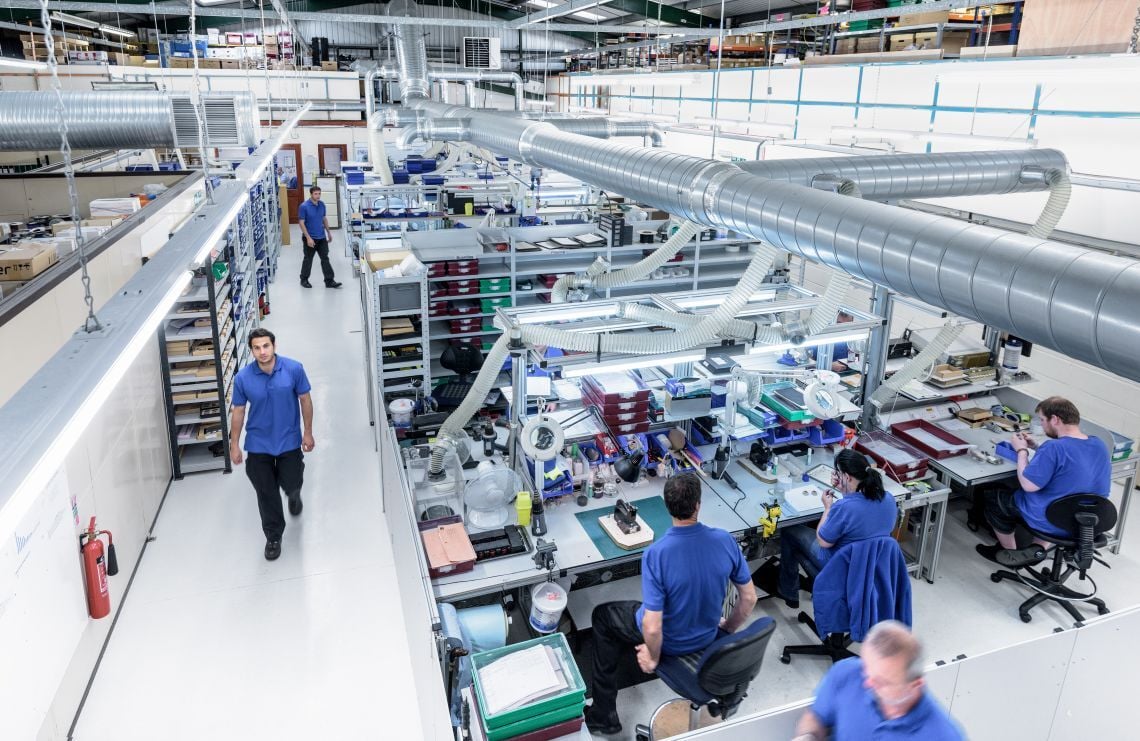
An operator is moved to a variant-heavy station for a shift. Two components look almost identical. The task is executed cleanly, just with the wrong part. The issue is discovered later: rework, quality gate pressure, sometimes a line stop. Again: not a motivation issue. A context issue.
In both cases, the knowledge exists somewhere. It’s just not accessible when decisions are made under time pressure.
Why “Training + Standard Operating Processes (SOPs)” Break Down When Rotation Is Constant
Most operations rely on a mix of onboarding, SOPs, and experienced people filling the gaps. That works until rotation becomes normal operating mode:
Key operators and supervisors spend too much time answering the same questions. Instructions are correct, but they don’t show up when the step is executed. Small early deviations turn into scrap, rework, and safety concerns.
The critical point: process knowledge exists, but it’s not delivered where it matters most: in the zone, at the station, in the moment.
RTLS as the Missing Link: Turning “Where” Into Operational Clarity
This is where real-time location systems change the game. Not as a “tracking project,” but as a practical way to trigger the right information at the right time.
RTLS platforms provide the missing context: where a person, asset, or material is, and what it is interacting with. That makes it possible to add simple guardrails that are tied to real execution, not to assumptions.
In many environments, this can start with three triggers:
-
A person arrives at a zone or station
-
A tool, cart, or container is picked up or moved
-
A batch, route, or task is started
When one of these moments occurs, the operator receives short, targeted guidance for the next step.
And importantly: this guidance does not have to live on a phone screen. Many teams prefer it directly at the point of work.
Example options include:
-
E-Ink displays at stations that update automatically based on the current job, station state, or material present
-
Lightweight alerts when a person or asset enters a wrong zone
-
Simple confirmations for sequence-dependent steps before the process continues
This turns RTLS into a process stability layer: it reduces guesswork and prevents repeatable execution errors.
What RTLS-Driven Guidance Helps Prevent in Practice
1) Wrong place, wrong time: reducing search and walking time
In intralogistics, a large share of daily friction is not “big failure,” it’s time loss: searching, double-handling, and rerouting.
RTLS makes it possible to:
-
identify where pallets, carts, and critical tools actually are in real time
-
prevent misplacements by flagging wrong-zone moves early
-
reduce time spent searching, especially during shift handovers and rotation
The business effect is simple: fewer exceptions, less firefighting, more predictable flow.
2) Wrong handoff: preventing material merging and kitting mistakes
In production and assembly, many costly issues come from wrong combinations: the wrong kit, the wrong component joining the right order, the right material arriving at the wrong station.
RTLS can support guardrails such as:
-
verifying that required items are present at the correct station before a step starts
-
flagging when a component or kit is approaching the wrong area
-
ensuring that material handoffs follow the defined path, not shortcuts
This is where “quality issues” often start, and where early prevention is far cheaper than late detection.
3) Qualification and release: making process approvals practical
In safety- or quality-critical areas, execution reliability depends on simple checks that are easy to miss under pressure.
RTLS can enable:
-
zone-based reminders when authorization is required
-
supervisor confirmation workflows tied to the actual station or step
-
audit-friendly proof that a release happened at the right time and place
That strengthens compliance without turning operations into bureaucracy.
askPixi: Making RTLS Actionable Through Questions, Not Dashboards
Even with RTLS in place, many teams hit the same barrier: the data exists, but operational decisions still depend on who knows where to look.
That’s why a conversational layer matters.
With askPixi, teams can interact with RTLS-driven operational data through natural questions, for example:
-
“Where is the cart for Order 1842?”
-
“Why is Station 7 waiting?”
-
“Which step is causing the longest delays on this line today?”
-
“What changed in the last hour compared to the previous shift?”
More importantly, askPixi supports earlier awareness. Instead of noticing problems after they show up in KPIs, teams can detect patterns and bottlenecks sooner:
-
repeated wrong-zone moves
-
a station that is frequently starved of material
-
a recurring handoff issue around a specific step
-
increasing dwell time that signals a developing delay
This doesn’t replace operational leadership. It shortens the path from “something feels off” to “here is what is happening.”
How to Start Without a Big Program: A Pilot That Produces Real Signal
You don’t have to rebuild onboarding or your entire process architecture. Start with one process where rotation causes real cost:
-
Pick one flow (warehouse staging, kitting, line feeding, inbound, outbound)
-
Identify two or three steps where errors or delays are most expensive
-
Define the triggers using RTLS context (zone, station, asset, material)
-
Deliver short guidance at the point of work (E-Ink, alerts, confirmations)
-
Use Ask Pixi to make bottlenecks and exceptions visible without hunting through dashboards
Then measure operational KPIs over two weeks:
-
scrap and rework
-
supervisor minutes per shift
-
search time and extra travel paths
-
wrong-zone events, wrong handoffs, sequence deviations
-
near misses in qualification-critical areas
If those numbers move, you’re not improving “training.” You’re improving execution reliability.
Conclusion
In rotating environments, stability doesn’t come from perfect training. It comes from reliable execution under pressure.
RTLS provides the real-time context that lets you deliver guidance at the exact moments decisions are made. askPixi makes that context usable through simple questions and earlier warning signals.
A practical question to start with:
Which three execution errors cost you the most when teams rotate?
If you share one process where rotation drives costly mistakes, we can help you pinpoint the moments where RTLS-driven guardrails and askPixi will have the highest impact.